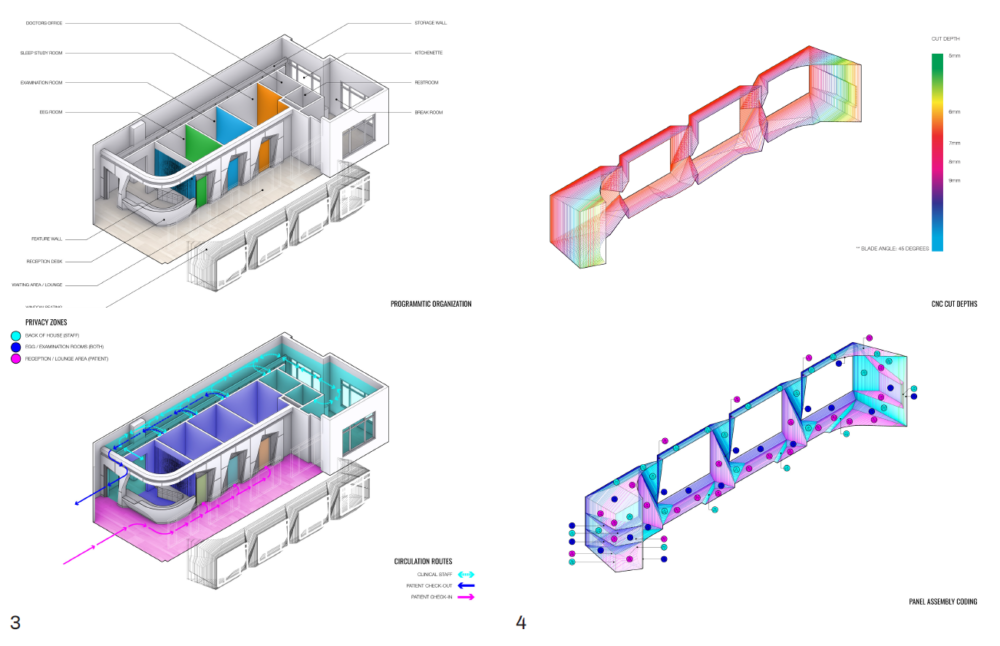
“Enhancing Therapeutic Experiences: The Role of Geometry, Color, and Texture”
This peer-reviewed conference project presents work by Alvin Huang and appears in ACADIA 2023: Habits of the Anthropocene.
Author: Alvin Huang Publication:ACADIA 2023: Habits of the Anthropocene Editors: A. Crawford, M. Swackhamer, R. Beckett, and J. Vanuchi Year: 2023 Type: Peer-reviewed conference project
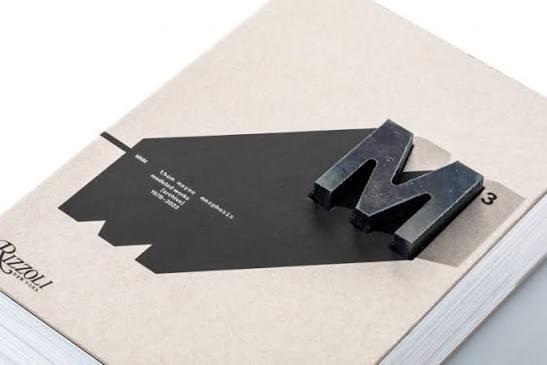
In this essay for MMM: Morphosis, Model, Monograph, Alvin Huang examines the architectural models and design practice of Thom Mayne and Morphosis.
Author: Alvin Huang Publication:MMM: Morphosis, Model, Monograph Editors: Thom Mayne and Hallie Black Publisher: Rizzoli Year: 2022 Type: Book chapter / essay
Abstract
Written for MMM: Morphosis, Model, Monograph, “Multivalent Model(s)” examines the architectural models of Thom Mayne and Morphosis and expands the model beyond its familiar role as a miniature representation. Alvin Huang considers modeling as noun, verb, and adjective: a surrogate for a future building, an iterative process of simulation and prototyping, and an exemplary embodiment of architectural intentions and values. Through Morphosis’ work, the essay argues that models can be generative forms of inquiry—physical, spatial, and tectonic thought processes that connect technical exploration with architecture’s social and cultural responsibilities.
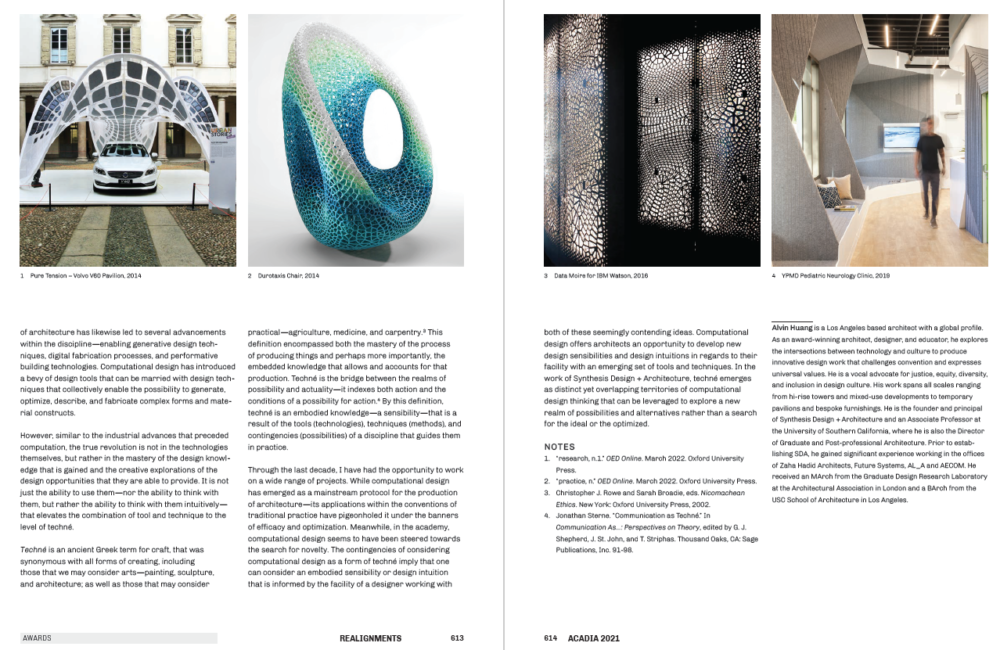
This book chapter / essay presents work by Alvin Huang and appears in ACADIA 2022: Realignments — Toward Critical Computation.
Author: Alvin Huang Publication:ACADIA 2022: Realignments — Toward Critical Computation Editors: B. Bogosian, B. Farahi, J. Grant, and J. Scott Publisher: Riverside Architectural Press Year: 2022 Type: Book chapter / essay
Abstract
Prepared in connection with the ACADIA Digital Practice Award, this essay positions Synthesis Design + Architecture at the intersection of research and practice. Surveying more than a decade of work across speculative proposals, objects, installations, interiors, façades, and buildings, Alvin Huang argues that computational design achieves its greatest value not through novelty or optimization alone, but as techné: embodied knowledge joining tools, techniques, and creative possibility. The work describes an experimental practice that balances vision with pragmatism while challenging architectural conventions.